

Introduction
Every great speech needs a strong opening line. A good thought can grab attention in seconds, set the tone for the entire talk, and leave a lasting impression on listeners. This is why short English thoughts for speech are so popular among students, teachers, and public speakers.
Whether you’re preparing for a school assembly, a morning speech, or a small classroom presentation, a well-chosen thought can make your speech memorable. In this article, you’ll find simple, powerful, and easy-to-remember thoughts that suit almost any occasion.
Why Short Thoughts Work Better in Speeches
Long, complicated sentences often lose an audience’s attention. Short thoughts, on the other hand, are easy to understand, easy to say, and easy to remember. They work well because they:
- Deliver a clear message in just one line
- Are simple enough for young students to memorize
- Create an instant emotional connection with listeners
- Fit perfectly into the opening or closing of a speech
A short thought doesn’t need to be complex to be powerful. Sometimes, the simplest words carry the deepest meaning.
Best Short English Thoughts for School Assembly Speech
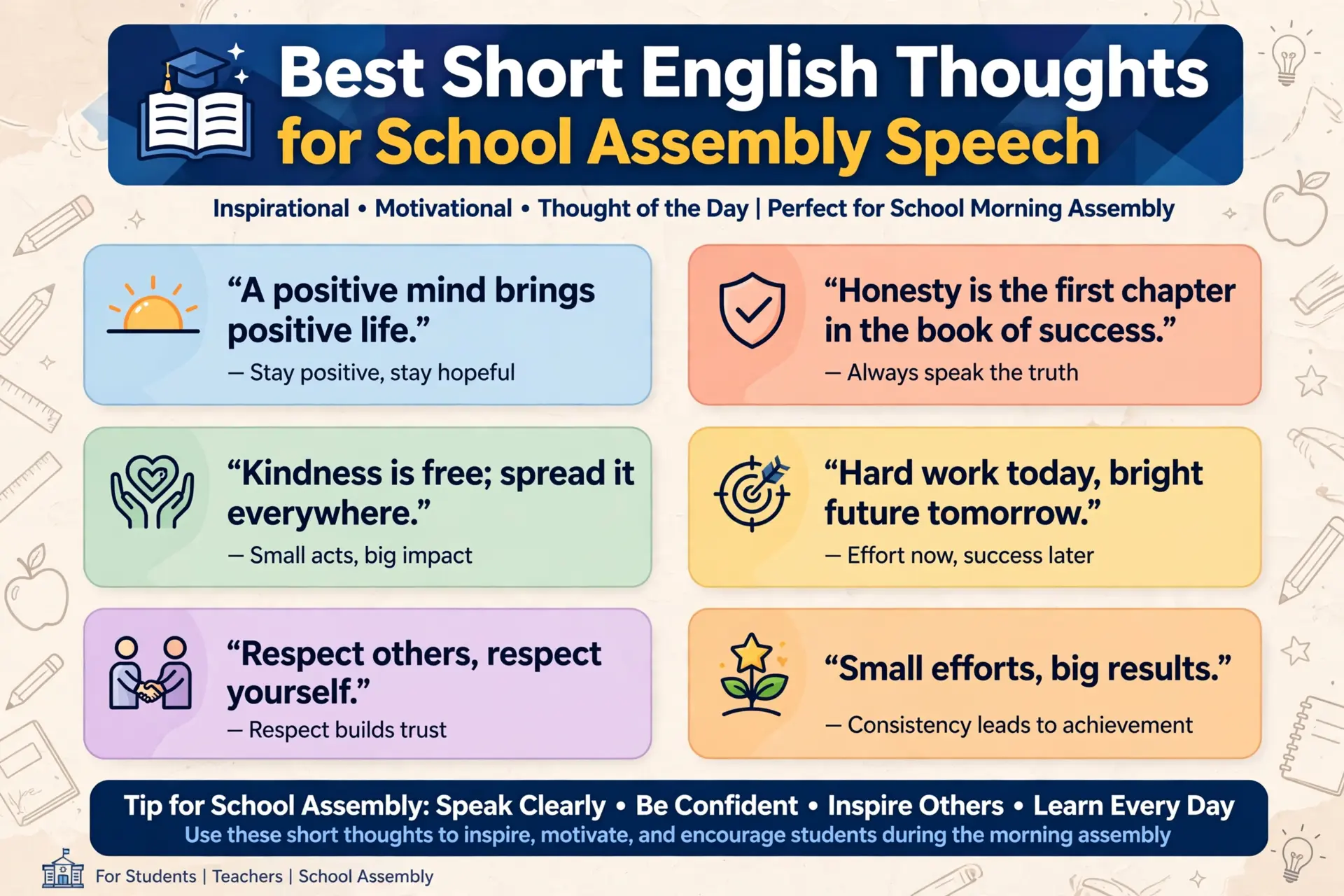
School assemblies are one of the most common places where students share a “thought for the day.” These thoughts are usually short, positive, and easy for everyone to understand.
Thoughts on Success and Hard Work
- Success is not the key to happiness. Happiness is the key to success.
- Hard work always beats talent when talent doesn’t work hard.
- Dreams don’t work unless you do.
- Small steps every day lead to big results.
Thoughts on Kindness and Character
- Be kind, for everyone you meet is fighting a hard battle.
- A good character speaks louder than good words.
- Kindness costs nothing but means everything.
- The smallest act of kindness is worth more than the grandest intention.
Motivational Thoughts for Daily Speech
Motivational thoughts help students and speakers stay positive throughout the day. These lines work well as a “morning thought” or “thought for the day” in schools, offices, and public gatherings.
Thoughts on Positivity
- Every morning brings new hope and new chances.
- A positive mind finds a way, a negative mind finds excuses.
- Believe you can, and you’re halfway there.
Thoughts on Self-Improvement
- Growth begins the moment you step out of your comfort zone.
- You don’t have to be perfect, just better than yesterday.
- The best investment you can make is in yourself.
Short Thoughts on Life for a Meaningful Speech
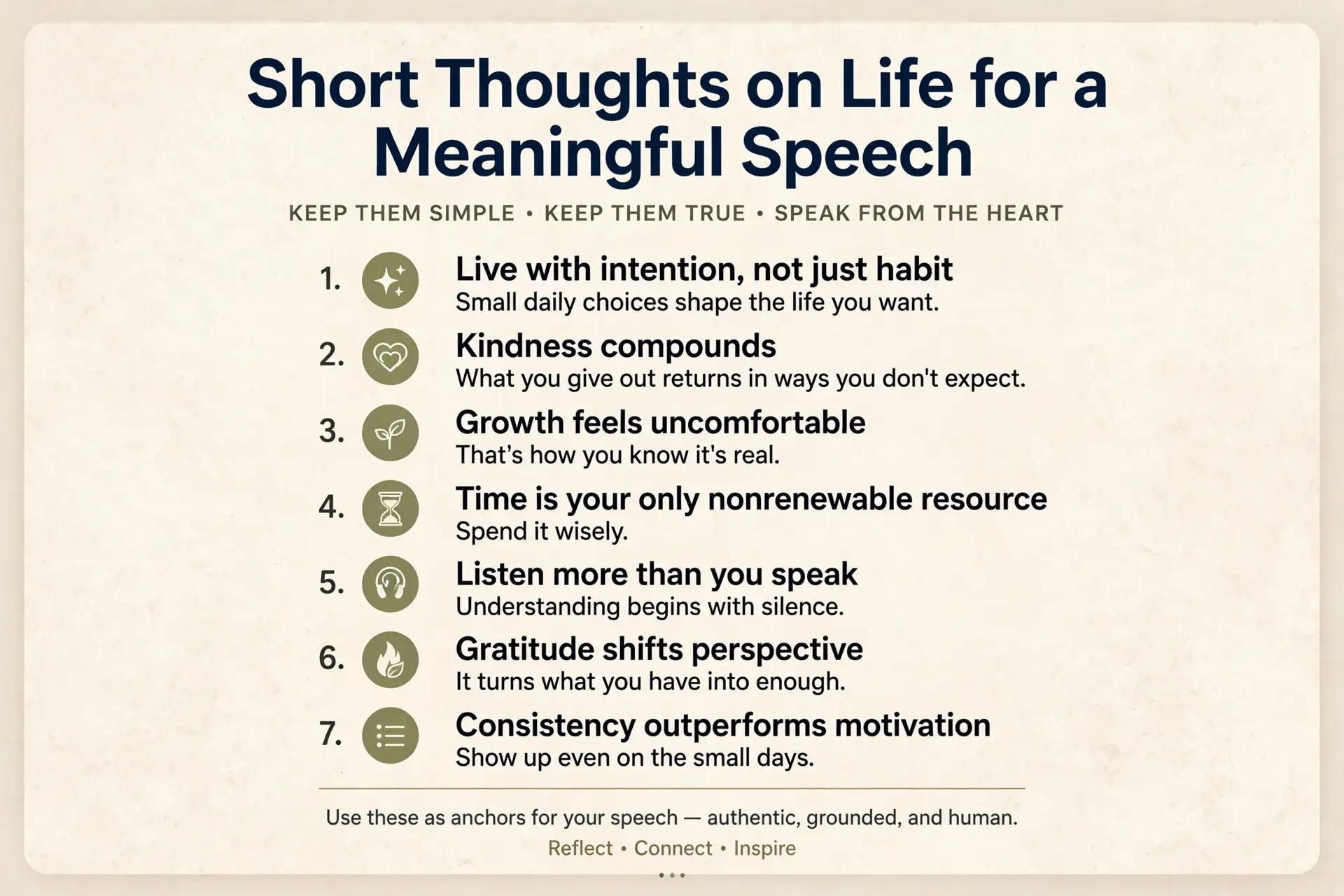
Sometimes, a speech needs a thought that makes people pause and reflect. These life-related thoughts add depth and emotion to any talk.
Thoughts on Time and Opportunity
- Time waits for no one, so make every moment count.
- Opportunities don’t happen, you create them.
- Yesterday is gone, tomorrow is a mystery, today is a gift.
Thoughts on Gratitude
- Be thankful for what you have, and more will come.
- Gratitude turns what we have into enough.
How to Choose the Right Thought for Your Speech
Picking the perfect thought depends on your audience and occasion. Here’s a simple way to choose:
- Know your audience – Students need simple, motivating lines. Adults may prefer deeper, reflective thoughts.
- Match the occasion – Morning assemblies suit positive thoughts, while farewell speeches suit emotional ones.
- Keep it short and clear – A thought should be easy to say in one breath and easy to remember.
- Add a personal touch – Explain the thought briefly in your own words after saying it.
Tips to Deliver a Short Thought Confidently

A great thought loses its impact if it’s not delivered well. Keep these tips in mind:
- Speak slowly and clearly, especially on the last word.
- Pause for a second after saying the thought.
- Maintain eye contact with the audience.
- Practice the thought a few times before your speech.
These small habits can turn a simple line into a powerful moment.
FAQs on Short English Thoughts for Speech
1. What is a good short thought for a school speech? “Hard work always beats talent when talent doesn’t work hard” is a simple, powerful thought that suits most school speeches.
2. How do I start a speech with a thought? Begin with the thought itself, pause briefly, then explain its meaning in one or two simple sentences before moving into your main speech.
3. What are good thoughts for a morning assembly? Thoughts about positivity, gratitude, and new beginnings work best, such as “Every morning brings new hope and new chances.”
4. Can short thoughts be used in English class presentations? Yes, short thoughts are perfect for presentations because they are easy to remember and help open or close a topic smoothly.
5. How long should a thought for speech be? A good thought is usually just one sentence, ideally under 15–20 words, so it’s easy to say and easy to remember.
6. Where can I find more thoughts for speech practice? Books on quotations, motivational websites, and famous speeches are great sources for finding fresh and meaningful thoughts.
7. Are short thoughts effective for public speaking? Yes, short thoughts grab attention quickly and help set the tone of a speech, making them very effective for public speaking.
Conclusion
Short English thoughts for speech are a simple yet powerful tool to make any talk more engaging. They work well in school assemblies, morning speeches, and everyday presentations because they are easy to say, easy to remember, and easy to connect with.
Whether you choose a thought about success, kindness, positivity, or life, the key is to keep it short, clear, and meaningful. With the right thought and a confident delivery, you can start any speech on a strong and memorable note.
[…] Are English thoughts useful for school speeches? Absolutely. A relevant thought can make the introduction or conclusion of a speech more powerful […]